If you want to go fast, go alone. If you want to go far, go together.
We are obsessed with fast. From get-rich-quick to short lists for success, we clearly no longer believe that the journey is more important than the destination. Losing the appreciation of the journey is more than just the appreciation for the process; it is the people that we miss out on the most.
Channeling my proclivity to trust evolutionary psychology as part of our reasons for doing many things, I don’t know that I can change my belief that humans are pack animals. While I believe that large groups of humans tend to self-destruct, small, tight-knit groups seem to excel socially.
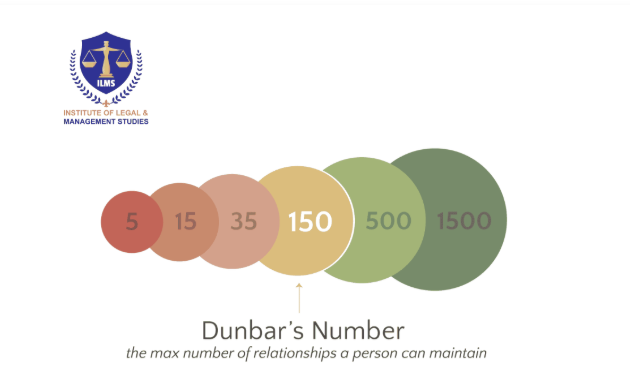
Dunbar’s number states that most humans can maintain about 150 relationships. This consists of a few different levels of connectivity.
The Inner Circle (1–5)
The Close Friends (6–15 people)
The Casual Friends (16–50 people)
The Extended Network (51–150 people)
The Social Acquaintances (150+ people)
Inner Circles and Close Friends are in decline. This is simultaneously happening as our social acquaintances are skyrocketing. In some ways, many are finding it easier to connect with influencers and media personalities than with actual people. However, these are the least important. Maintaining a healthy network of casual and close friends is critical to our development, happiness, and overall success.
What seems to be holding us back is the intimate nature of real human engagement. Out of 50 people, you are bound to find a low level of friction that, more and more, we are unable to cope with. In any group of 50 people that are actually willing to be around us, we are bound to find wild differences in communication styles, religious affiliations, political opinions, and overall agreeableness. Up until recently, this was the spice of life that we called variety. Today, these differences are dealbreakers and reasons to avoid any confrontation, even the lowest-level ones.
Encountering differences is never comfortable. They naturally make you question your own beliefs and who is right, as if right is really a destination we arrive at. Before the age of the internet, finding fully aligned opinions was nearly impossible. There were no forums and channels catered to like-minded people. You had to get to know someone before you would uncover much of these deeper elements of people’s personalities. This is partly due to some adherence to the rules of good manners: avoiding topics like politics, religion, and sex. By the time you found something that you disagreed on, you may have already found three other things you had in common that could allow some grace. Now, these opinions are written on t-shirts, so there is no guessing.
Uncomfortable as different opinions can be, they help us so much to develop our understanding of the larger world and ourselves. If we allow ourselves to avoid those sensitive topics, we can focus on the people, rather than the opinions they hold. It becomes easier to acknowledge that there are few villains in this world, just situations and ways of thinking we are not aware of. This empathy only comes from seeing the good that most people are capable of.
This is why collecting that network is so important. 50 people who hold different beliefs are not the opposite of an echo chamber. They don’t give us what we want to hear; they give us other perspectives to consider, wrapped up in a safe and friendly package. Even in an argument, there is a chance to walk away and come back, maintaining a cordial friendship. Maybe once you realize one difference out of 5 similarities, you take that information and stick to the points you have in common.
Finding people who agree with you is faster, though. No friction does make conversations about nothing at all go a little smoother. It makes it clear why vanilla ice cream is the most commonly liked. Unoriginal, unoffensive, and predictable. That level of predictability that keeps everything moving in the same direction, no matter which direction it is…. until you reach the cliff.
That level of predictability makes us feel we are right, even if we are wrong. It makes it easy to quietly go along with someone else’s bad ideas so we don’t rock the boat. It makes us capable of thinking only about those like us. That isn’t growth, it is stagnation. It dumbs down our ability to learn, adapt, change, and think. It renders us incapable of kindness because of our validated self-righteousness.
We don’t need any new sources of validation. We need sources of challenge. That is what close relationships are for: testing ideas to see which ones work to promote cohesive packs, and which ones do not (Most do not). This testing will not happen on the internet. The algorithms won’t allow it. The places that profit from creating curated content to boost sales have nothing to gain by challenging your opinions. These sources of challenge can only be found in the real world, with real people who hold real opinions and think real thoughts. The way to get this challenge is with this one magic phrase:
“I don’t know that I can agree with that. It’s ok, we can agree to disagree…” Then change the subject.
Leaving room for others to hold different opinions and not taking it personally is what will help us go far. Developing the ability to hear opposing beliefs and be willing to admit that there may be some merit helps you ask better questions. Collecting a wide variety of opinions helps you form solutions that may actually work for more people. This is what takes us far.
Start small. Be kind to one person wearing the wrong t-shirt. Don’t worry about addressing it, just smile and try to find one thing in common. Don’t bother with the things you don’t agree on; look for something you do. Understand that their ability to cause harm as well as good in this world is exactly the same as yours, because I promise, you are probably wrong on some big things, too.
Until next time, stay well.
Reid Pierpoint