Originally posted August 12th, 2025 on Medium
We had a good run. The last 75 or so years were a time of relative abundance and stability. Not for all and not in the same way, but probably as good as it ever had been. This abundance and stability-focused system started unravelling a while ago, but the decade has shown a more rapid decline. No matter when it started, now we are seeing the effects more broadly.
This is not a political rant in the least bit. Every party has done its fair share of damage and had a hand in opening Pandora’s box. Trying to attribute blame at this point only adds insult to injury. If you find yourself ready to point a finger, I challenge you to look at the side you are identifying with as well.
The fact is that since the 1940s, we have advanced consumerism in every possible form and branded it as wealth, happiness, and security. Worse, we built the entire model on comparison. We want what we see others have, and want more and better. Our belongings became our individuality, and we cherish our originality more than anything. After all, you can’t be better than people if you see yourself as an equal.
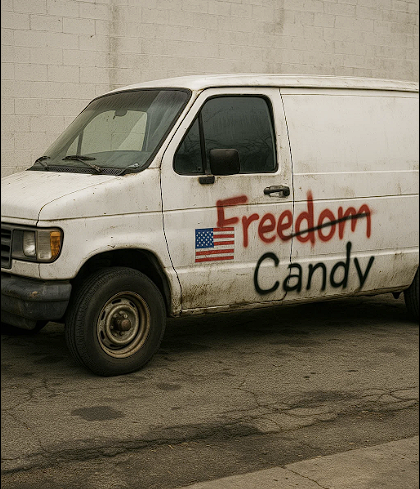
Advertising is easy to blame for this, as well as capitalism, but we cannot place the blame solely on either, because we participated in ramping them both up to unhealthy levels. We spent our money and our votes on what we saw as the most important thing, and that was having more stuff. With the quest for more, we settled for lower quality. We settled for adjusting our minimal needs to include comforts that were unimaginable a few years ago, even in our lifetimes. We went along with what we knew was bad for us because it felt better than standing up and maybe struggling a bit. We paused responsibility as long as we could. Now, we are forced to face all the deferred pain all at once, lifetimes of it. Worst of all, we didn’t save anything to help us ride it out.
We are all complicit in where we have arrived. There were chances to make inconvenient but better decisions, and we didn’t. Just think of how many times you read about how Amazon has mistreated workers and screwed its customers, then you order something from them simply because saving a dollar and 2-day shipping is just too good to pass up. How about when you think of eating at that local coffee shop once or twice a week, but opt for Starbucks instead?
One of the most blatant examples of the condescension that I believe most people would give a pass to is in a social media post I saw recently. An account that I often see touting the “tax the billionaires” lines posted how the new depreciation rules allowed them to skirt large amounts of taxes by buying a vacation house and renting it out as an Airbnb. If you can’t see the hypocrisy, check where that finger is pointing again.
The people vote for this stuff. They vote for it because they think it will give them some sort of advantage, but even if it does, the way advantages work is that it gives you an edge over someone less fortunate. Those kinds of advantages compound for those who have more and charge interest to those who have less. Most things we fight over are not really zero-sum, but this pretty much is. Money is somewhat finite in the economy, outside of printing more. Furthermore, taxes generally don’t benefit the wealthy as much as they do the lower and middle classes. The programs and infrastructure in the public sector do not normally pay dividends to the wealthy. Dodging taxes doesn’t really hurt the government; their paychecks will still be cashed, but it does hurt those who rely on government spending.
I understand that there are tons of details in this example that could each have an entire dissertation attributed to it, but the point is simply that we are constantly attacking outcomes and voting solely out of self-interest, with no credence given to the bigger picture. We are looking for the best outcome just to happen, not for the state, country, or world, but for us individuals. We are not willing to deal with the predictable discomfort of fixing things if it denies us the chance to feel like we are getting ahead.
How to Survive the Coming Days
We are entering a time of discomfort. It has been winding up for a while. Some are feeling it now, but for most, there will be no escaping it. The ability to fight this battle in Washington is lost for now. While I applaud the efforts of everyone in governments trying to make things better with the right intentions, the majority of citizens are pretty powerless in that regard.
Where individuals do have power, though, is in their behavior. Their behavior towards others and their actions in their personal lives. I firmly believe that if individuals ignore the ideologies and camps they feel they are placed in by online content, they know that they share more in common with anyone they are in physical proximity to than the mouthpiece they follow on social media, profiting from discourse. This is where unity happens. Whether your neighbor has a Trump or a Biden sign in their yard, their problems are likely closer to yours than a political candidate. Worse, your district is likely going to swing one way with or without your votes.
Your behavior matters in your actions, not your words or opposition. Are you angry about billionaires not paying taxes while doing whatever they can to dodge them? Are you willing to go to anti-abortion rallies but not volunteer to work with kids in the foster system? Are you fighting inequality while offering preference to one group over another and hating others? These types of behaviors continue the fighting, deepen wounds, and make real progress impossible. It opens avenues for opportunists to capitalize on the discourse and distraction. It prevents actual unity among the masses of people with average circumstances and thus prevents real progress.
Hard times are coming. The inflation of nearly everything, an alarming employment market outlook, a gutting of public services and programs, and decreasing international cooperation. Whatever you take on, whether these are good or bad things, they will cause change and usher in long periods of hard times for many in our economy. The choice for many will be to adjust to a more modest lifestyle or be forced to cut back due to a lack of planning. The two things that offer relief in such times are frugality and community. Sadly, those two things are in short supply today.
We have a chance to unify and throw a surprise punch. Reduce spending, not because you have to, but because you can. There is a long-held idea that consumer spending always increases. It drives GDP, our stock market, our tax system, and thus our government. What do you think will happen if a large chunk of the population that can afford to buy frivolously stopped? What if the usage of the major corporation’s products took a hit? What if we all collectively decided to stop comparing and looking for advantages, but started seeing commonalities, and identified together as citizens? Panic at the top would ensue. The grip they have on the narrative would loosen, and the levers they had to pull to garner support would all break.
There are solutions out there to start moving to a better future, but they won’t be voted on in the government halls; they will be acted upon in the streets. So are you going to ride off the proverbial cliff with the ones playing games with robots and actors, or stick it out with your fellow citizens and try to rehabilitate the real world, where the real people live? I hope to see you out there with me, touching some grass.