If you know how IQ works, you will know that the score is where you fall in the distribution of everyone in the group. 100 is the most average by design. As a population gains intelligence, IQ scores reflect that change.
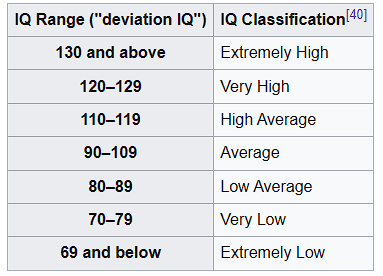
According to World Population Review, the US ranks 32nd in the world with a national IQ average of 99.7. For reference, Einstein was estimated to have had an IQ of 160, and Chat-GPT4 is tracking at a full-scale IQ of 124. Now, no one would expect us to pass Einstein with any regularity, and anyone who has opened any news feed has been told that AI is smarter and better than people at most everything. We seem to be starting to believe that.
However, if you go back to the nineties, as the internet started to gain traction and software began to be implemented anywhere, the narrative that computers were more capable than humans entered the collective mind. This sentiment grew into the 2000s as we entered the world of search engines, then into the 2010s, everything started to have its own app. Technology has always had one goal: to do things faster and better than humans.
As these systems creep into our lives, one by one, we found they were a bit better than us. Calculators are much better at math than I am. Word processors are better for writing than pen and paper. Let’s not forget that I no longer have to do extensive reading, or god forbid, go to the library, to get answers to a question; I can simply Google the answer. This led to insane amounts of progress in terms of productivity because we were able to do many of the tasks that once took time and physical effort to produce from our computers and phones. Computers were so good that we no longer felt the need to even teach the old ways of doing things in the same way that we no longer use blood letting in medicine.
We changed nearly every aspect of our lives to adopt these new ways of doing things, and as we did, we were able to introduce complexities that we never could before. We could track more, expedite approvals, and streamline task intake. In fact, we demanded it, because after all, everyone has internet access today, right?
One of the best, and my least favorite examples, is taxes in the US. Taxes in the US get extremely complicated fast. This is why, for personal taxes, only about 20% of the population files on their own, 35% use CPAs, and the rest use software (The CPAs also use software). The Tax filing software market is dominated by Intuit with its Turbotax platform. By some accounts, they have up to 80% of the market. This grip manifests in the fact that they spent $3.8 million in 2023 lobbying, primarily against policies that would make filing taxes easier for average people. They officially argue that they are able to manage tax filings better than the government, because taxes are so complicated. I digress.
The fact is that escaping using software for many of our daily tasks is impossible. Everything points us to submit information via a website and download an app. These programs are made by engineers, guided by industry experts who speak a very different language than the average person who just wants to pay their bill, book an appointment, or do their taxes. Their job is not to make your life easier, but as someone who has spent a decade in tech startups, it is to make sure that you can’t do the task without them.
While many software companies will tout offering this expertise wrapped in an easy-to-use package, they are working to rewrite the way you think about the task entirely and highlight its complexity in efforts to lock you into using their product. This level of doubt around the complexity of tasks opens the entire system up to adding complexity to the process, whether out of user protection, customer capture, regulation, or just new ways to track activity and make more money. The complexity begets more complexity.
With the simultaneous disruption and innovation in nearly every industry at once, the normal person now has to understand it all at a slightly higher level and maintain some level of expertise in the tech space, even if it is a master user, capable of navigating any website.
This couldn’t come at a worse time, because we aren’t learning very well. While we may not be failing IQ tests, the way we acquire and use information is adapting to the internet. Right now, in the age of information, according to USFacts.org the US has a 54% rate of the population that reads at a middle school level (6th Grade), and 21% of the population is functionally illiterate. Functional illiteracy is defined as “struggling with tasks that require understanding, evaluating, using, and engaging with written text to participate in society, achieve goals, and develop their knowledge.” That is one-fifth to half of our society that lacks the ability to comprehend and navigate the system. With these types of statistics, we should be simplifying as many critical tasks as possible, not making them more complex.
This type of statistic is not evolving as fast as technology, but the ways the majority of our population deals with them will, and not in a good way. Because the truth is, we have to be more competent than ever to maintain a job, pay bills, and do anything that contributes to our income stability.
We can argue about ways to make technology help people more, or ways to better help the lower half of our population, but it doesn’t change the fact that we are battling systems, technologically, economically, and socially that are operating above a 120-point IQ and scaling fast. Life is thinking and operating faster than we can process, and we are leaving people behind at an alarming rate. It started long before the current AI race and can only be solved with genuine humanity.
What pains me to watch is the fact that no one seems to be paying attention to the distribution graphs beyond where the money sits. There will always be a lower end of the distribution. If those on the bottom today disappear, the next bottom is only as standard deviation away. Today’s average easily can become tomorrow’s lower 20%.
Graph — Kaufman, Alan S.; Engi Raiford, Susan; Coalson, Diane L. (2016). Intelligent Testing With the WISC-V. Hoboken, New Jersey: John Wiley & Sons. p. 237. ISBN 978–1–118–58923–6.https://en.wikipedia.org/wiki/IQ_classification